Homeowners worry about their sump pumps’ run times because running excessively can indicate a problem, and never running at all can mean failing to protect their homes during a flood.
A “normal” Sump Pump run time varies greatly. It will run often if there’s a stretch of heavy rain but rarely during dry weather.
This article dives deeper into how often sump pumps typically run, what affects their run times, and why running constantly can be a major concern.
 Quick Takeaways
- A sump pump should only run when water reaches the activation level in the pit.
- On dry days, your sump pump shouldn’t run at all.
- During heavy rains, it may run every few minutes, which is normal.
- Nonstop running usually means there’s a mechanical or drainage issue.
- Nonstop running or excessive cycling should be inspected by a professional.
How Often Should a Sump Pump Run?
A sump pump should run only when groundwater or rainwater raises the water level in the sump pit. During heavy rains, expect it to run every few minutes.
During dry weather, it shouldn’t run at all. If your sump pump is running nonstop or cycling a lot (especially during dry weather), there’s a problem.
What Affects How Often a Sump Pump Runs
How frequently a sump pump runs depends on external factors, like the local weather or drainage, and internal factors, like the sump pump’s size.
Weather and Rainfall
Heavy rains raise the groundwater levels, making your sump pump run frequently to prevent flooding. Melting snow can have the same effect, forcing the sump pump into overdrive.
Seasonal spikes, like in spring and fall, often see heavy rainfall too, which raises the water tables and keeps your sump pump running.
Groundwater Level and Soil Conditions
Clay soil retains water longer, causing water to collect, thereby forcing your sump pump to run more often. In contrast, sandy soil is highly permeable and allows water to drain into the ground. If you have sandy soil, your sump pump should run less often.
If your home is below the natural water table, underground water may enter your sump pump frequently, forcing it to run a lot. And if you live near bodies of water, like lakes or rivers, you’re more likely to have higher water tables, increasing how often your sump pump needs to run.
Pump Size and Capacity
An undersized pump runs constantly as it can’t keep up with the water flow, while a correctly sized system runs only when necessary.
Sump Pit Size and Water Inflow
A smaller pit fills up with water faster, causing your sump pump to run more. A large pit, on the other hand, holds more water, allowing it to take longer to fill before it needs to cycle.
Check Valve and Discharge Line Condition
The sump pump’s check valve opens to let water out. If it’s stuck, clogged, or doesn’t seal, water may flow back into the sump pit, causing the sump pump to run constantly.
The discharge line is a pipe that carries water away from the sump pump. If it’s clogged or damaged, water never exits the sump pump, forcing the sump pump to run nonstop.
Normal vs Abnormal Sump Pump Run Patterns
A normal sump pump runs only when it needs to remove water. If it’s running continuously or not at all, there’s clearly a problem. Here are some patterns you should look out for.
Normal Sump Pump Operation
Normal sump pump operation runs only when there’s heavy rain. Once the water has been removed, it should stop.
It should also stop completely between cycles. A sump pump that’s running normally is quiet and consistent.
Warning Signs of a Problem
A problematic sump pump runs constantly (even during dry weather), turns on every few minutes when there’s no rain, short cycles repeatedly, and makes grinding or rattling noises.
Why a Sump Pump Might Be Running Too Often
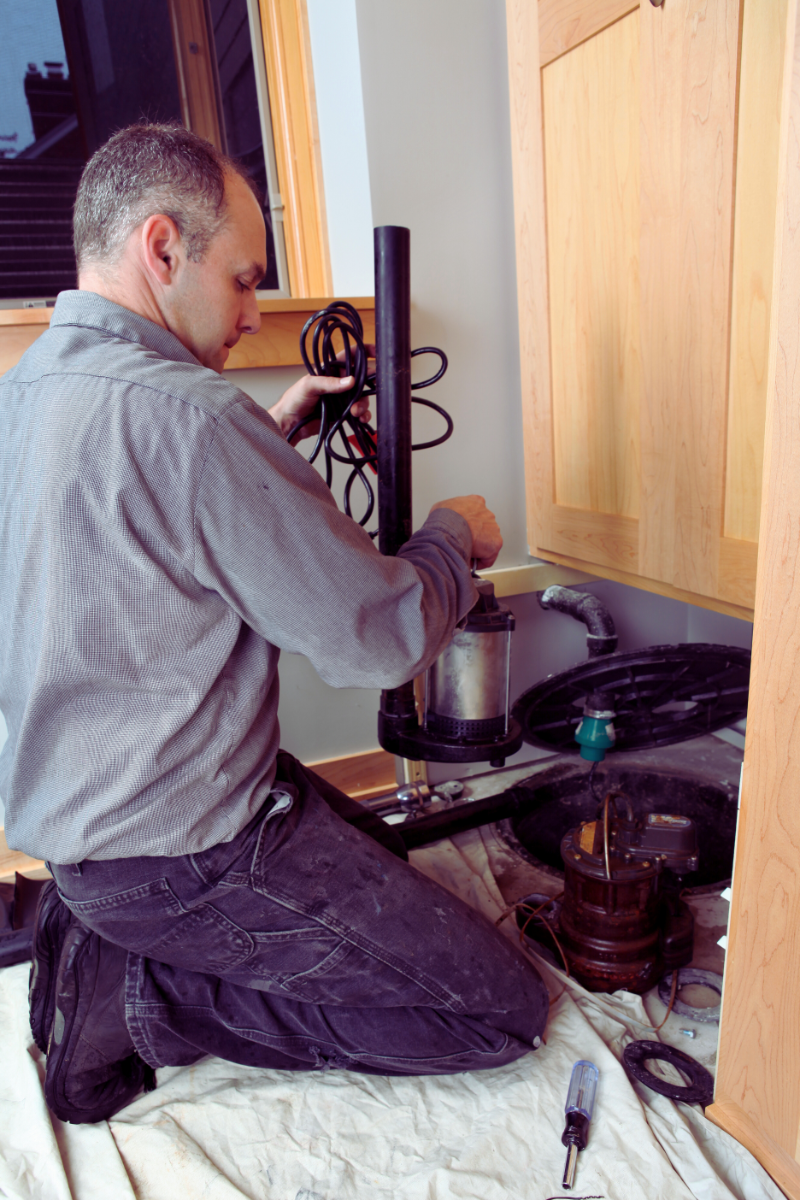 If your sump pump is running too often, here are the possible causes:
- Stuck or misaligned float switch: the float switch is either stuck or improperly positioned.
- Failed or missing check valve: If the check valve malfunctions or is missing, water can’t exit the sump pump. This forces the sump pump to run continuously.
- Undersized pump: An undersized pump can’t keep up with the amount of water flowing into the sump pump, forcing the sump pump to run nonstop.
- Clogged or frozen discharge line: Water can’t drain away from the sump pump if you have a clogged or frozen discharge line. This causes water to return to the sump pump, forcing the sump pump to cycle back on.
- Excessive groundwater intrusion: If water keeps entering the sump pit due to poor drainage, flooding, or a naturally high water table, your sump pump will run constantly.
Why Constant Sump Pump Running Is a Serious Issue
A sump pump running nonstop puts a lot of strain on the unit’s motor. Eventually, this can lead to a burned-out motor and premature pump failure.
This constant running will also increase your energy bills. Worse, if your pump fails and you’re in the midst of heavy rains, your home could be at risk of flooding.
That’s why it’s important to contact our plumbers if you suspect your sump pump is running constantly. We can inspect your system, identify the problem, and fix it before the next heavy rain.
How to Reduce Excessive Sump Pump Cycling
When you call our Fort Myers Benjamin Franklin team, we can help reduce excessive sump pump cycling.
Here are some solutions our punctual plumbers offer:
- Float switch adjustment: We’ll adjust the float height to increase the distance the water rises before your sump pump turns on.
- Check valve replacement: We’ll replace a faulty or worn-out check valve so that the check valve allows water to exit the sump pump.
- Pump resizing: If your sump pump is too small or too large, we’ll install the right size for your needs.
- Drainage improvements: We’ll slope your discharge line away from your sump pump and ensure it’s clear and free of debris.
- Backup pump evaluation: We’ll also evaluate your backup pump by testing the battery/charge and inspecting its capacity.
When to Call a Sump Pump Repair Professional
Sump pump repairs can be complex, and the signs that something is wrong aren’t always straightforward.
However, call a sump pump repair professional when you see the following.
- Pump runs nonstop
- Pump runs when there’s no rain
- Pump cycles frequently every few minutes, even during dry weather
- Pump is old and isn’t efficient
FAQ – Sump Pump Run Frequency
Is it normal for a sump pump to run every 15 minutes?
It’s normal if you’re experiencing heavy rain. However, this kind of cycling during dry weather signals a problem.
Why does my sump pump run when it hasn’t rained?
If your sump pump is running and it hasn’t rained, call a sump pump repair professional. You may have a faulty check valve, a stuck float switch, or a clogged drain line.
Can a sump pump run too much and burn out?
Unfortunately, yes. When a sump pump runs too much, the motor can overheat and eventually burn out.
How long should a sump pump run per cycle?
Ideally, a sump pump should run about one minute per cycle. Sump pumps with larger pits may run 2-3 minutes per cycle.
Does frequent sump pump running mean I need a new pump?
If you’re experiencing heavy rains or flooding, your sump pump cycling frequently is usually normal. However, if you notice this behavior in dryer weather, then you should schedule an inspection.
Schedule Sump Pump Repair With Our Expert Plumbers
 Fort Myers has high water tables and frequent thunderstorms, so you want to make sure your sump pump is always in good working order. If you’re worried about the condition of your system, we can help.
We diagnose constant running or short cycling. We repair float switches and check valves, and we replace failing or undersized pumps. We also provide solutions to protect your basement from flooding.
Contact us before the next storm hits, and our punctual plumbers will be there on time. Benjamin Franklin Plumbing is the Punctual Plumber! We serve Fort Meyers and the surrounding areas.