Benjamin Franklin

Fort Myers, FL

  • Home
  • Services
    • Drain Clearing
      Drain Unclogging
      Drain Cleaning
      Emergency Plumbing
      Faucet Installation
      Faucet Repair
      Garbage Disposals
      Garbage Disposal Repair
      House Repiping
    • Hydro-Jetting
      Leak Detection
      Plumbing Repairs
      Sewer Line Repair
      Sewer Line Replacement
      Shower Installation
      Shower Repair
      Sump Pumps
      Tankless Water Heaters
    • Toilet Installation
      Toilet Repair
      Water Filtration
      Water Heater Installation
      Water Heater Repair
      Water Line Repair
      Water Line Replacement
      Water Softeners
      Well Pump Repair
  • Specials
  • About
  • (239) 376-0892
  • Book Now

Do I Need a Plumber to Fix a Leaky Faucet?

Closeup Image of Diego, a Benjamin Franklin Plumbing Tech, in a kitchen at a home in Fort Myers FLHey there! Is that leaky faucet driving you crazy? Trust me, I get it – it’s not just annoying, it’s literally money going down the drain. Would you believe that one leaky faucet can waste over 3,000 gallons of water in a year? That’s rough on both your wallet and the environment.

Many Fort Meyers, Florida homeowners wonder if they can fix a leaky faucet themselves. The short answer, is yes. But that comes with a warning. If you do not have the tools or know-how to make the repair or if you are otherwise uncomfortable doing them, it’s always best to call on the plumbing pros at Ben Franklin! Let’s take a look at how to repair a leaky faucet and when to call in the pros.

What Causes a Faucet to Drip?

Let’s talk about why your faucet might be dripping in the first place. Most of the time, it’s just normal wear and tear. You know how everything gets a bit worn out over time? Same thing happens with your faucet parts. Sometimes it’s an old washer that’s given up, or maybe the cartridge inside has seen better days. If you’re noticing water around the handle, there’s probably a little rubber O-ring in there that’s not doing its job anymore. And sometimes, it’s just built-up gunk in the valve seat causing trouble.

Good news though – you can often fix these issues yourself if you’re handy with basic tools. That said, there’s no shame in calling a Benjamin Franklin pluming pro if you’re not comfortable doing it yourself, especially if you run into corroded parts or something that just won’t budge.

Repairing Different Types of Faucets

Before we dive into the how-to, let me fill you in on the different types of faucets you might have. There are four main kinds:

  1. Compression faucets – these are the old-school ones with separate hot and cold handles. You may still have one of these as a bathtub faucet.
  2. Cartridge faucets – could be one handle or two, but they use a cartridge to control the water.
  3. Ceramic disk faucets – these are the fancy ones that tend to last forever.
  4. Ball faucets – you see these a lot in kitchens, with just one handle that moves around.

Fixing a leaky faucet can often be handled as a do-it-yourself project if you’re comfortable with basic tools and small repairs. However, some situations may require the help of a plumbing professional from Ben Franklin in Fort Meyers, FL, especially if the issue involves corrosion or stuck components.

Tools You Will Need to Fix a Leaky Faucet

If you’re thinking about tackling this yourself, here’s what you’ll need:

  • An Allen wrench
  • Both types of screwdrivers (flathead and Phillips)
  • An adjustable wrench
  • Some needle-nose pliers
  • A towel or sponge for cleanup (trust me, you’ll want this!)

Now, before you start taking anything apart, here’s the most important tip: Turn off the water! You’d be surprised how many people skip this step and end up with an impromptu shower. Also, plug up the drain – those tiny screws love to make a break for it, and fishing them out of the P-trap is no fun at all.

Preparation Steps for Fixing Leaky Faucets

  1. Turn Off the Water Supply: Shut off the valves under the sink to stop water flow.
  2. Block the Drain: Use a rag or stopper to prevent small parts from falling into the drain.
  3. Organize Parts: Keep screws, washers, and other components in order on a paper towel or tray to make reassembly easier.

Step-by-Step Repair Instructions by Faucet Type

1. Compression Faucet

  • Problem: Worn washer.
  • Fix: Replace the washer.
  1. Turn off the water supply.
  2. Unscrew the handle with a screwdriver.
  3. Remove the valve stem using an adjustable wrench.
  4. Replace the old washer with a new one of the same size.
  5. Reassemble the faucet and test it.

2. Single-Handle Ball Faucet

  • Problem: Worn springs or valve seats.
  • Fix: Replace these components.
  1. Shut off the water supply.
  2. Remove the handle using an Allen wrench.
  3. Disassemble the faucet to access the springs and seats.
  4. Replace the worn parts with new ones from a repair kit.
  5. Reassemble the faucet and check for leaks.

3. Cartridge Faucet

  • Problem: Worn O-rings, springs, or the cartridge itself.
  • Fix: Replace damaged parts.
  1. Turn off the water supply.
  2. Remove the handle and retaining clip.
  3. Pull out the cartridge with pliers.
  4. Replace any worn parts or the cartridge if necessary.
  5. Reassemble and test for drips.

4. Ceramic Disk Faucet

  • Problem: Worn seals or cartridge.
  • Fix: Replace seals or the cartridge.
  1. Turn off the water supply.
  2. Remove the handle and decorative cap.
  3. Unscrew the ceramic cylinder to access the seals.
  4. Replace the worn seals or the entire cartridge.
  5. Reassemble and check for leaks.

Just remember, if you start feeling in over your head at any point, there’s nothing wrong with calling in a Benjamin Franklin Plumbing pro. Sometimes what looks like a simple drip can turn out to be something trickier.

Pro tip: Think about getting on a regular maintenance schedule. It’s like going to the dentist – a little prevention goes a long way in avoiding bigger problems down the road.

And hey, if you’re in the Fort Myers area and want some help with this, Benjamin Franklin Plumbing is just a phone call away. We’ve got folks available 24/7 because let’s face it – plumbing problems don’t exactly keep regular business hours! Remember at Ben Franklin – If there’s any delay it’s YOU we pay!

Filed Under: Blog

How to Fix a Garbage Disposal Leaking from the Bottom

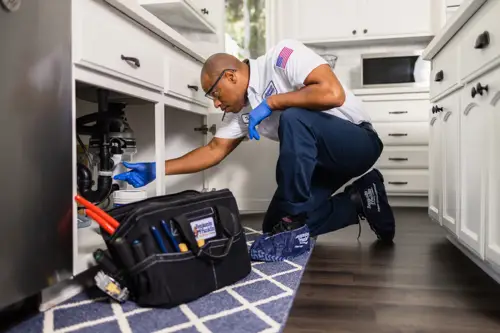
Benjamin Franklin Plumbing Tech, Layla, working under a sink in a home in Fort MyersUh-Oh, your garbage disposal leaking? Let’s face it: finding a puddle under your sink is never a good moment. When your garbage disposal starts leaking, it can quickly turn into a home maintenance headache. But don’t panic! I’m going to walk you through exactly how to diagnose and fix that pesky leak.

Common Garbage Disposal Leak Locations

First things first: where’s the leak coming from?

Imagine your garbage disposal as a bit of a troublemaker with multiple ways to cause a mess. There are four main spots where garbage disposal leaking usually starts from.

  1. The Sink Flange (Where It Meets the Sink). This is basically the connection point between your disposal and sink. Over time, the sealant can dry out, and the bolts can get loose or rusty. It’s like an old seal that’s lost its grip.
  2. The Dishwasher Hose. This little flexible hose brings water from your dishwasher to the disposal. Because it’s made of plastic, it can crack, wear out, or have loose connections – kind of like an aging garden hose.
  3. The Drain Line. This is the pipe that carries water away from your disposal. The connection can leak if the screws get loose or the rubber gasket wears down.
  4. The Reset Button Area. If water’s dripping from the bottom near the reset button, that’s bad news. It usually means the internal seals have given up the ghost, and you’re probably looking at a replacement.

How to Find Where the Garbage Disposal is Leaking

Ready to play detective and find where your garbage disposal leaking point? Start by clearing out everything under the sink and grabbing a flashlight. You’re going to play plumbing detective now! Look for:

  • Puddles
  • Damp spots
  • Discoloration
  • That musty smell that screams “water damage”

Plumbing Pro Tip: While checking, run water, run the dishwasher, and really observe each connection point. Water has a sneaky way of hiding its trail.

Quick Fixes vs. Total Replacement

For most leak spots, you can probably save your disposal with some DIY magic:

  • Sink Flange: Reapply plumber’s putty and tighten those bolts.
  • Dishwasher Hose: Tighten connections or replace the hose.
  • Drain Line: Check and replace the gasket or tighten screws.

But if water’s coming from the reset button area? Sorry, but it’s probably time to say goodbye to your current disposal. Call the plumbing professionals at Benjamin Franklin in Fort Meyers, FL! They can help you determine if there is a way to repair the disposal or they can install a new one.

Safety First!

Before you start any repairs, always – and I mean ALWAYS – turn off the power at the circuit breaker. No one wants an unexpected electrical surprise while fixing a sink!

When to Call in the Pros from Ben Franklin Plumbing

Look, DIY is great, but there’s no shame in calling a Service Minds plumbing professional if:

  • The leak persists after your repairs.
  • You’re not comfortable doing the repair.
  • The disposal needs complete replacement.

The team at Ben Franklin Plumbing can swoop in and save the day if you’re feeling overwhelmed.

Most garbage disposal leaks aren’t the end of the world. With a bit of patience, the right tools, and this handy guide, you can tackle most issues yourself. Just remember: catch those leaks early, and you’ll save yourself a lot of headaches (and potential water damage) down the line.

Now go show that leaky disposal who’s boss!

Filed Under: Blog

Can I Fix a Garbage Disposal Myself?

Benjamin Franklin Plumbing Tech, Trevor, Working underneath a sink in a home in Fort MyersTroubleshooting Your Garbage Disposal: A No-Stress Guide

Ever had that moment when the kitchen sink in your Fort Meyers, FL home turns into a stubborn, clogged mess? If you’re dealing with a garbage disposal that’s acting up, don’t panic! Most disposal problems are totally fixable, and you don’t always need to call a Benjamin Franklin plumber.

Why Is My Garbage Disposal Not Draining?

First things first, garbage disposals aren’t magical machines that can handle anything you throw at them. They’re actually pretty particular! Using your disposal incorrectly can lead to serious clogs. Some of the common culprits behind disposal clogs include:

  • Using too little water: These little guys need water to flush food particles down the drain. If you’re not running water, you’re asking for trouble.
  • Pouring hot grease down the drain: Big mistake! Hot grease might seem liquid, but it’ll cool and stick to your pipes faster than you can say “plumber.”
  • Overloading the disposal: Trying to grind a mountain of food at once? Your disposal will push back.
  • Grinding the wrong stuff: Coffee grounds, eggshells, and stringy vegetable peels are disposal enemy number one.

To keep your disposal working smoothly, avoid sending problematic items down the drain and keep the cold water running while the garbage disposal is operating.

Your Pro Troubleshooting Plan

Safety first! Before you start poking around, make sure the disposal is completely powered off. Unplug it or switch off the circuit breaker, and double-check that it won’t suddenly spring to life.

Now, let’s play detective:

  1. Take a Peek Inside; Grab a flashlight and look inside the disposal. Use tongs or pliers to pull out any visible chunks of food or debris. Think of it like fishing, but way less fun.
  2. Plunger Power: Got standing water? Time to break out the plunger. Cover the disposal opening and give it some firm plunges. Pro tip: If you’ve got a double sink, plug the other drain to create better suction.
  3. The Magic Reset: Most disposals have a reset button hiding on the bottom. Press it and see if that brings your disposal back to life.
  4. Manual Blade Rescue: No reset magic? Try an Allen wrench or even a wooden spoon handle. Gently rotate the blades to free up any jam. Just be careful and gentle – you’re not trying to win a strength contest.

Home Remedies That Might Help

  • Baking Soda and Vinegar Trick: Pour a cup of baking soda, follow with a cup of vinegar, let it fizz for 15-20 minutes, then rinse with warm water. It’s like a gentle spa treatment for your disposal.
  • Cleaning Tablets: These are like vitamins for your disposal. Use them regularly to keep things running smoothly.

Tips to Prevent Garbage Disposal Clogs

Want to avoid future garbage disposal disasters like clogs and leaks? Here are some golden rules:

  • Always run COLD water during operation.
  • Avoid putting fibrous or starchy foods, grease, or large quantities of food waste into the disposal.
  • Grind small amounts of food at a time to prevent overloading.

What If You Can’t Fix the Problem?

While most garbage disposal issues can be handled at home, some problems require professional attention. If you’ve tried everything and your garbage disposal is still giving you grief, it might be time to call  in a Benjamin Franklin professional. There’s no shame in asking for help – sometimes appliances just need an expert touch.

Remember, your garbage disposal is a kitchen helper, not a garbage can. Treat it right, and it’ll make your kitchen cleanup a breeze!

Filed Under: Blog

Are There Any Ways to Keep Drains Unclogged?

Benjamin Franklin Plumbing Tech, Trevor, With Homeowners in Fort MyersWe’ve all been there – you’re in the shower, and suddenly you’re standing in ankle-deep water. Or maybe you’re doing the dishes, and that sink just won’t drain. Frustrating, right? Well, I’ve got some simple tips that’ll help you keep your drains unclogged and avoid these types of plumbing headaches. Trust me, your drains will thank you!

Keeping Bathroom Drains Unclogged

You know what’s the biggest troublemaker in bathroom drains? It’s usually a cocktail of hair, soap gunk, and stuff that shouldn’t be there in the first place. But don’t worry – I’ve got your back!

First things first – those drain stoppers? They’re like tiny bouncers for your pipes, catching all sorts of stuff. Give them a quick clean once a week. Just pull them out, rinse them off under warm water, and scrub away any gunk. It’s amazing how much grime these little guys catch!

Here’s a pro tip that’ll save you tons of hassle: brush your hair before jumping in the shower. I know, I know – it seems obvious, but you’d be surprised how many people skip this step. Those loose strands have to go somewhere, and trust me, you don’t want them partying in your pipes!

Got pets? If you’re bathing your furry friend in the tub, throw a washcloth or drain cover over the drain first. Unless you want to create a fur-lined pipe system (spoiler alert: you don’t), this simple trick will save you from a world of trouble.

Along with these preventive tricks, regular drain cleaning can help keep your drains unclogged.

Keeping Kitchen Drains Unclogged

Kitchen drains have their own set of challenges. The biggest troublemaker? Grease. That bacon grease might be liquid when it’s hot, but once it cools down in your pipes… well, let’s just say it’s not pretty.

Here’s what you can do:

  • Get yourself a drain strainer. It’s like a tiny bouncer for your sink, catching food bits before they can cause trouble.
  • When it comes to your garbage disposal, be nice to it! No coffee grounds, potato peels, or eggshells – they’re like kryptonite for disposals.
  • Always run cold water when using the disposal. Hot water might seem logical, but cold water actually helps solidify grease, making it easier to chop up and wash away.

And here’s my favorite weekly ritual: the hot water flush. Once a week, boil up some water and slowly pour it down your kitchen drain. It’s like a spa day for your pipes, melting away any grease that’s trying to stick around.

When to Call the Pros at Ben Franklin

Look, we all love a good DIY project, but sometimes you need to know when to tag in the experts. If you’ve tried these tips and your drains are still giving you grief, it might be time to call in reinforcement. Plumbing professionals at Ben Franklin have tools and tricks up their sleeves that we regular folks just don’t have access to. Professional drain cleaning can help keep your pipes running smoothly longer.

If you’re in the Fort Myers, FL area, the folks at Benjamin Franklin are your go-to drain doctors. They’ve seen it all and fixed it all!

Taking care of your drains  isn’t exactly the most exciting part of homeownership, but a little prevention goes a long way toward keeping your drains unclogged. Think of it like dental hygiene for your house – a little regular maintenance and now saves you from major headaches (and expenses) down the road.

Remember, your drains work hard for you every day. Show them some love, and they’ll keep things flowing smoothly for years to come. And hey, if you ever need backup, there’s no shame in calling the Benjamin Franklin plumbing pros. That’s what they’re there for!

Keep these tips in mind, and you’ll be well on your way to having the happiest drains on the block. And trust me, happy drains make for a happy home!

Filed Under: Blog

How Often Should I Have My Drains Cleaned?

How Often Should I Have My Drains Cleaned?Hey there! Ever wondered how often you should have your drains cleaned in your Fort Myers, FL home? Trust me, I get it – drain maintenance isn’t exactly the most exciting topic, but it’s one of those household tasks that can save you from some real headaches down the road. Let’s break down everything you need to know about keeping your drains happy and healthy. We’ll start with what you can do to keep your drains clean and then, we’ll discuss how to know when it’s time to call in a Benjamin Franklin Plumbing pro!

Drain Cleaning Frequency: Weekly, Monthly, or Yearly?

You know how you have different cleaning schedules for different parts of your Fort Myers home? Well, having your drains cleaned works the same way. Let me walk you through it.

First off, there’s the yearly stuff. Think of it like your annual health check-up, but for your pipes. Getting a professional plumber from Benjamin Franklin in once a year is super smart, even if everything seems fine. They’ve got all these fancy tools that can spot and fix issues before they turn into major problems. It’s one of those “better safe than sorry” situations.

For the DIY maintenance (because who doesn’t love saving money?), you’ll want to get into a weekly and monthly routine.

Weekly might sound like a lot, but I promise it’s pretty simple:

  • Just pour some boiling water down your drains.
  • If things are moving a bit slow, grab your trusty plunger.
  • For bonus points, try a quick baking soda rinse.

Monthly, you’ll want to do a bit more. My favorite trick? The good old baking soda and vinegar combo. It’s like a science experiment that actually helps your home! This dynamic duo breaks down all that gross stuff that builds up in your pipes – you know, the hair, soap scum, and whatever else ends up down there.


Safe Methods to Clean Your Drains

Here’s the thing about drain cleaning – you don’t need fancy (and dangerous) chemicals to get the job done. In fact, those harsh drain cleaners can actually mess up your pipes and aren’t great for the environment either.

Instead, stick to these tried-and-true methods:

  1. Plunger: This is a go-to tool for clearing clogs in sinks, toilets, or showers. Make sure you use the correct type for each fixture to create a tight seal and dislodge blockages effectively.
  2. Auger or Plumber’s Snake: These tools are useful for breaking through tough clogs or pulling out hair and other debris trapped deep in the pipes.
  3. Hot Water: Pour boiling water down the drain to dissolve grease and flush away loose debris. This is a quick and easy method for maintaining kitchen sinks.
  4. Baking Soda and Vinegar: Mix these household items for a natural and effective cleaning solution. The reaction helps to break down buildup and deodorize the drain.

Avoid Chemical Drain Cleaners

Using chemical drain cleaners is not the way to get your drains cleaned. They can cause more harm than good as they can damage your plumbing and create environmental hazards.

Regular Drain Maintenance Tips

Want to know the secret to avoiding drain drama? It’s all about prevention.

Here are some insider tips:

For your garbage disposal (if you’ve got one):

  • Never, ever pour grease down there (trust me, it’s a recipe for disaster).
  • Always run cold water when you’re using it.
  • Give it a quick run every week, even if you haven’t used it.

Other smart moves:

  • Pop some drain strainers in your sinks and showers (they’re cheap and super effective).
  • Sprinkle some baking soda down there weekly to keep things smelling fresh.
  • Do that monthly baking soda and vinegar treatment we talked about.

Good habits can go a long way in preventing clogs and keeping your drains cleaned out and functioning properly.


Signs You Need Your Drains Cleaned by a Ben Franklin Professional

Look, sometimes you need to wave the white flag and call in reinforcements.

Here’s when you should definitely get a professional on the phone:

  • If you’re dealing with the same clog over and over.
  • When using one drain causes problems with another.
  • If multiple drains are moving slow (this could be a main line issue).
  • If you spot water pooling in your yard (definitely not good).
  • And obviously, if you’re seeing any backup of sewage (yuck!).

Remember, there’s no shame in calling a plumbing pro from Benjamin Franklin for help  when you need it. Sometimes what looks like a simple clog could be pointing to a bigger issue that needs professional attention.

And hey, if you’re in the Fort Myers, FL area, the folks at Benjamin Franklin Plumbing are always ready to help. They handle everything from routine maintenance to those middle-of-the-night emergencies we all dread.

The key takeaway? A little regular maintenance goes a long way in keeping your drains flowing freely. It might seem like a pain now, but it’s way better than dealing with a major plumbing disaster down the road!

Filed Under: Blog

How to Know It’s Time to Replace a Main Water Line

Layla, a female Benjamin Franklin Plumbing tech going over a quote with a homeowner couple in their kitchen in Fort MyersIs Your Main Water Line Trying to Tell You Something? Your home’s main water line might not be something you think about often, but it’s actually the lifeline that keeps clean water flowing to your taps. When it starts having problems, things can get messy (and expensive!) pretty quickly. Let’s talk about what can wear out your water line and how to spot trouble before it turns into the need for a water line replacement.

Causes of Wear and Tear on Main Water Lines

Weather Changes

Mother nature isn’t always kind. You know how we bundle up when it gets colder outside? Well, your pipes need to be protected like that too. Cold weather makes them expand and contract, which can lead to cracks over time. And even though the weather isn’t too wild in Fort Myers, Florida, changes in the weather can make the ground shift around. This puts extra stress on your buried pipes.

Heavy Usage

Daily life takes its toll on water lines. Think about how much water your family uses every day – showers, dishes, laundry, watering the garden. That’s a lot of work for your pipes! High water pressure might feel great in the shower, but it can actually speed up wear and tear on your plumbing.

Aging Infrastructure

Old pipes mean new problems that need to be checked out by a plumbing professional at Service Minds Ben Franklin.
If your home’s been around for a while (we’re talking 40+ years), your water line might be made of older materials like galvanized steel or cast iron. These materials tend to break down over time – kind of like how an old car starts needing more repairs as it ages.

Signs Your Main Water Line May Need Replacement

7 Warning Signs You Shouldn’t Ignore

  1. Your Water Bill is Through the Roof : Has your water bill suddenly shot up even though your usage hasn’t changed? That’s often your first clue that water’s leaking somewhere it shouldn’t be.
  2. Shower Pressure. Playing Games One minute you’re enjoying a nice strong shower, the next it’s barely a trickle? Inconsistent water pressure usually means something’s up with your main line.
  3. Water Stains Where They Shouldn’t Be: Noticed any mysterious water stains on your walls or ceiling? That’s your house trying to tell you something’s leaking behind the scenes.
  4. Unwanted Houseguests: If you’re seeing more bugs or rodents than usual, they might be attracted to water from a cracked pipe. These little critters are surprisingly good at finding water sources!
  5. Strange Noises in Your Walls: Hearing hissing, banging, or gurgling sounds when you use water? That’s not your house trying to sing – it’s usually air bubbles in the pipes, and it’s worth getting checked out.
  6. Water Looking or Smelling Funky: If your water starts looking cloudy, rusty, or smells odd, don’t just ignore it. Damaged pipes can let all sorts of stuff get into your water supply.
  7. Random Wet Spots in Your Yard: Finding puddles in your yard when it hasn’t rained? Unless you’ve got a secret spring, there’s probably a leak in your water line.

Need Help? We’ve Got Your Back! At Benjamin Franklin Plumbing, we’re experts at tracking down and fixing water line problems. We use cool tech like video pipe inspections to find exactly what’s going on underground, and we can fix or replace pipes without turning your yard into a construction zone.

Remember, catching these issues early can save you from bigger headaches (and bigger bills) down the road. If you notice any of these warning signs, don’t wait – let a Service Minds Ben Franklin pro check it out before it becomes a major problem!

Filed Under: Blog

Does Homeowners Insurance Cover Main Water lines?

A Benjamin Franklin Plumbing Van pictured in front of a home in Fort MyersEver had that heart-stopping moment when you discover water gushing from a pipe in your Fort Myers, Florida home? Or maybe you’re just wondering what would happen if you did? What about main water lines? Are they covered? Well, let’s break down what your homeowners insurance actually covers when it comes to water damage – and trust me, it’s not as straightforward as you might think! Being informed about your policy’s details can help you avoid surprises during the claims process.

Are You Covered for Burst Pipes?

Here’s something that’ll make you feel better: if a pipe suddenly bursts and turns your living room into a swimming pool, you’re probably covered! Insurance companies generally understand that these things can happen to anyone, even the most careful homeowners.

They’ll typically help pay for:

  • Fixing up your soggy walls and floors.
  • Replacing that waterlogged furniture.
  • Getting your electronics back in working order.

But here’s the catch (isn’t there always one?): if you’ve been ignoring that tiny leak under your sink for months and it finally gives way, your insurance company might not be so sympathetic. They’re big on the whole “sudden and unexpected” thing, not so much on the “yeah, I knew about it but figured it could wait” situation. Your plumbing needs regular maintenance to prevent leaks and damage. A Ben Franklin plumbing professional can make sure your home stays free from leaks that cause damage to your home.

It’s not often below freezing in Fort Myers, Florida. But sometimes, the weather will surprise Floridians with sub-freezing temps. If you are not prepared, there is a possibility your pipes will freeze and burst. Insurance companies will usually cover damage from frozen pipes that burst – but only if you’ve been responsible about it.

Want to stay on your insurance company’s good side? Here’s what they want to see:

  • Keep your house at least 55°F, even when you’re away (I know, it seems warm for an empty house, but trust me on this).
  • Wrap those pipes up nice and cozy with insulation.
  • If you’re heading out of town during the cold months, have a friend check on your place now and then.

These steps can help reduce risks and demonstrate responsible property management to your insurer.

Do I Have Coverage if my Main Water Line Breaks?

Now, main water lines can be tricky. That pipe running from your house to the street? It’s usually your responsibility, but standard insurance often won’t cover it if your water main wears out or gets crushed by tree roots. However, if you accidentally hit it while planting that new garden? That’s usually covered.

Pro tip: Look into getting a separate water line protection plan. It’s like insurance specifically for those pipes your regular policy turns its nose up at.

3. Key Insurance Policy Components for Broken Pipes

When water damage hits, three types of coverage jump into action:

  1. Dwelling Coverage: This is the heavy hitter that takes care of your house itself – the walls, floors, and everything built-in. Think of it as protection for anything that wouldn’t fall out if you turned your house upside down.
  2. Personal Property Coverage: This is for all your stuff – furniture, clothes, that fancy TV. Quick heads up: basic policies usually factor in depreciation (meaning your 5-year-old couch isn’t worth what you paid for it). Want better protection? Ask about water line replacement cost coverage.
  3. Loss of Use Coverage: If your house becomes temporarily uninhabitable (like when that pipe burst in your ceiling), this coverage helps pay for your hotel stays and even extra meal costs. Pretty neat, right?

Water Damage Not Covered by Homeowners Insurance

Let’s be real – there are some water situations where your insurance company will just shake their head “no.”

The big ones are:

  • Sewage backing up into your house (gross, I know).
  • Your sump pump deciding to take a day off.
  • Flooding from outside water (that’s what flood insurance is for).

And remember – neglect is never covered. Insurance companies expect you to take care of your home like you’d take care of your car. Regular check-ups and maintenance aren’t just suggestions! Benjamin Franklin Plumbing pros can make sure your plumbing is in good shape.

Think of your Fort Myers, Florida homeowners insurance like a good friend who’s happy to help in an emergency but expects you to be responsible. Keep up with maintenance, fix small problems before they become big ones, and know exactly what your policy covers.

And hey, if you’re not sure about something, just ask your insurance agent! They’d much rather explain things now than have to deny a claim later. Trust me, a quick conversation today could save you thousands tomorrow. Make sure you do your due diligence to protect your plumbing and main water lines by having a professional from Ben Franklin perform an annual inspection.

Filed Under: Blog

Traditional Toilet vs. Skirted Toilet: What’s the Difference?

Benjamin Franklin Plumbing Tech, Trevor, With Homeowners in Fort MyersChoosing a new toilet might seem simple, but it can get complicated with so many options available. Who knew choosing a toilet for your Fort Meyers, FL home could be so complicated? Don’t worry, though – At Ben Franklin Plumbing, we’ve got your back. Let’s chat about the big showdown: the skirted toilet vs. non-skirted toilets. Grab a seat (pun intended), and let’s dive in!

Skirted Toilet vs. Non-Skirted Toilet: The Main Differences

First things first – what’s the deal with these two types? Well, it’s all about the looks and the guts (or lack thereof).

Skirted toilets are like the sleek sports cars of the bathroom world. They’ve got this smooth, seamless look with a fancy “apron” that hides all the plumbing bits. Think of it as your toilet wearing a stylish skirt – hence the name! These bad boys scream “modern” and “chic.”

On the flip side, non-skirted toilets are your classic, no-nonsense option. They’re not trying to hide anything – pipes and bolts are out there for all to see. It’s like your toilet is saying, “Yeah, I’m a toilet. What of it?”

Comparison of Skirted vs. Non-Skirted Toilets

1. Cost: Which toilet is more expensive?

Cost is another important factor. Skirted toilets tend to be more expensive and can be more challenging to install, if you are a DIY hero. Non-skirted toilets, however, are usually more budget-friendly and simpler to set up. At Service Minds ben Franklin, our professional plumbers can install any type of toilet efficiently and seamlessly.

2. Maintenance: Does one clean easier than the other?

Here’s where skirted toilets shine – they’re super easy to clean. No nooks and crannies for grime to hide in. Just swish, swipe, and you’re done! Non-skirted toilets require a bit more elbow grease to get around all those exposed parts.

3. Aesthetics: Do you want sleek or practical?

Skirted toilets are the Instagram models of the toilet world. They look sleek, modern, and can really jazz up your bathroom. Non-skirted toilets are more like your trusty old jeans – they might not turn heads, but they get the job done and fit in just about anywhere.

4. Ease of Installation: Do you want the DIY option?

If you’re a DIY toilet installation warrior, non-skirted toilets are your best friend. They’re pretty straightforward to install – you can see everything you need to fiddle with. Skirted toilets, though? They can be a bit of a pain. All that sleek design means it’s trickier to get to the nuts and bolts (literally). You might want to call in the pros from Ben Franklin Plumbing to install the toilet.

5. Space Issues: How big is your bathroom?

Got a bathroom that’s more like a broom closet? A non-skirted toilet might be your best bet. They tend to be a bit more compact. Skirted toilets can be on the bulkier side, so they’re better suited for bathrooms with a bit more breathing room.


So, what’s it gonna be? If you’re all about that modern life, don’t mind splurging a bit, and have some space to spare, a skirted toilet could be your perfect throne. But if you’re watching your pennies, like to DIY, or have a snug bathroom, a non-skirted toilet might be just the ticket. If you are still stuck on which style of toilet to choose, give the pros at Ben Franklin a call. We will be glad to discuss the pros and cons to help you choose the best option for your Fort Meyers, FL home.

Remember, at the end of the day, both will get the job done. It’s all about finding the right fit for your style, space, and budget. Happy toilet hunting!

Filed Under: Blog

Can I Install a Toilet Flange on a Concrete Floor?

A Benjamin Franklin Plumbing Van outside a home in Fort Myers FLHey there, DIY warrior! Thinking about replacing a toilet flange on a concrete floor? I know, I know – it sounds like a pain, right? But don’t worry, it’s not as scary as it seems. If you’re already in the process of replacing a toilet, you may have run into a damaged, rusted, or broken flange. While working on concrete can make things a bit more complicated, there’s no need to stress. With a bit of know-how and the right tools, you’ve got this!

Safety Considerations & Toilet Flange Replacement

First things first – safety, folks! As soon as that toilet comes off, plug up that drain. Trust me, you don’t want sewer gases stinking up your bathroom (or worse, your tools taking a nosedive into the pipes). And while we’re talking safety, grab some latex gloves. Toilet work can get… well, let’s just say it’s not the cleanest job.

Before You Begin

Working with concrete requires specific tools. One of the most important tools for this project is a hammer drill. Your regular drill is just gonna laugh at concrete. You’ll need the hammer drill to create clean, precise holes. Don’t have one? No sweat! Most hardware stores rent them out. It’s way cheaper than buying one if this is a one-time gig.

What You’ll Need to Replace a Toilet Flange

It’s best to be prepared before you get started replacing the toilet flange. Here are the tools and other materials you’ll need to have on hand before you get started. If you are unsure, or you don’t have the proper tools, there’s no shame calling in a pro from Benjamin Franklin Plumbing to make sure the job is done right.

Tools:

  • Hammer drill with a 1/4-inch masonry bit
  • Multi-tool or angle grinder
  • Putty knife
  • Tape measure
  • Screwdriver

Materials:

  • Toilet (closet) flange
  • Latex gloves
  • Trash bag
  • Tapcon screws or masonry anchors

Step-by-Step Instructions

  1. Cut Off the Old Flange: First up, we gotta get rid of that old flange. If you’re lucky, you can just unscrew it. But let’s be real – those bolts are probably corroded beyond recognition. Time to break out the big guns (aka a grinder or multi-tool) and cut ’em off.
  2. Scrape Off the Old Wax Ring: Remember those gloves I mentioned? You’ll thank me now. Scrape off that old wax ring. It’s gross, it’s sticky, but it’s gotta go.
  3. Pick the Correct New Toilet Flange: Measure that drain pipe before you buy a new flange. Trust me, eyeballing it at the store is a recipe for multiple trips.
  4. Place T-Bolts in the New Toilet Flange: Before you put that new flange down, pop those T-bolts in. They should be pointing up, ready to grab your toilet.
  5. Position the Toilet Flange: Set that new flange in place. Make sure it’s flush with the concrete and lined up right. You don’t want a crooked toilet!
  6. Drill Holes Into the Concrete: Time for that hammer drill to shine. Drill four holes around the flange. Spread ’em out evenly – we want this thing solid.
  7. Screw the Toilet Flange Onto the Concrete: Use those special concrete screws (Tapcons are great) to secure the flange. But easy does it! Overtightening is bad news, especially with plastic flanges.

8. Final Steps: Slap on a new wax ring, lower that toilet into place, and tighten it down. You’re almost done!

When to Call a Professional

Look, we all have our limits. If you’re staring at that concrete floor and feeling way out of your depth, it’s okay to call in the pros at Benjamin Franklin. Sometimes, saving yourself the headache (and potential water damage) is worth the extra cost. A plumbing professional can get the job done quickly and efficiently, saving you time and potential headaches.

FAQs

1. Can you install a toilet on a concrete floor?

Yes, you can install a toilet on a concrete floor as long as the drainage plumbing is set up properly. The process involves securing the toilet flange directly to the concrete using special masonry screws.

2. What size screws are used for a toilet flange in concrete?

The most common size is 1/4-inch by 2 1/2-inch Tapcon screws. These screws are specifically designed for securing fixtures to surfaces like concrete.

3. How do I replace a PVC toilet flange in concrete?

To replace a PVC flange, start by unbolting the old flange from the concrete. After that, remove it, clean the area, and replace it with a matching new flange. Make sure to secure the new flange to the concrete with masonry screws or anchors.

See? Replacing a toilet flange on concrete isn’t so bad. Sure, it’s a bit more work than dealing with wood, but you’ve got this! Take it step by step, be patient with yourself, and before you know it, you’ll be flushing with pride at your handiwork. And hey, if things get too hairy, there’s no shame in calling the pros at Ben Franklin. Either way, you’re solving the problem, and that’s what counts!

Filed Under: Blog

Do I Need a Permit to Repair My Water Line in Fort Meyers, FL?

A Benjamin Franklin Plumbing Van pictured in front of a home in Fort MyersSo, you’ve got a water line that needs fixing, huh? Before you grab your wrench and dive in, let’s chat about what you need to know. Trust me, this stuff is important – especially here in sunny Fort Myers, FL. The region has some pretty strict rules when it comes to plumbing work. knowing the details can help you avoid mistakes, delays, and expensive fines.

Why Plumbing Regulations Matter

I know, I know. Rules aren’t fun. But hear me out. Our beautiful coastal paradise here in Fort Meyers, FL, comes with some unique challenges for our pipes. That salty air and those epic storms? They’re not exactly BFFs with your plumbing. Following the rules and regulations helps keep your home safe and can save you from some major headaches down the road.

1. Local Plumbing Regulations and Codes

First things first – we’ve got this thing called the Florida Building Code (FBC). It’s like the rulebook for all things construction, including plumbing. When you’re fixing your water line, you’ve gotta play by these rules.

Who’s keeping an eye on all this? That’d be the Fort Myers Development Services. These are the folks who’ll be giving you the thumbs up (or down) on your project.

2. Permits and Inspections

I get it. Paperwork is a pain. But trust me, skipping the permit process is like asking for trouble. You could end up with fines, having to redo all your work, or worse – unsafe plumbing. Yikes!

Here’s the deal: for most plumbing jobs (including that water line repair), you need a permit. You’ll submit your plan, they’ll check it out, and if it looks good, you’re golden.

Inspections are actually pretty helpful. They happen at the start, during, and after your project. Think of them as free advice from the experts who want to make sure your plumbing is in top-notch condition.

3. Approved Materials and Why They Matter

Listen, when it comes to pipes, not all materials are created equal. If the plumbing project isn’t done correctly with the approved materials, you could be looking at extensive problems with your pipes. Here in Fort Myers, we’ve got to think about that salty air and high humidity. PEX piping is a popular choice because it stands up to our coastal conditions like a champ.

4. Backflow Prevention

Ever heard of backflow? It’s when yucky water flows back into your clean water. Gross, right? That’s why we’ve got special devices to prevent it. If your water line repair involves stuff like irrigation systems, you might need one of these bad boys.

5. Environmental Considerations

Water Conservation

Fort Myers is big on water conservation. Using low-flow fixtures isn’t just good for the environment – it can also shrink your water bill. Now, that’s a win-win!

6. Finishing Your Project on the Right Note

Look, DIY is great for some things. But when it comes to major plumbing work, it’s usually best to call in the pros at Benjamin Franklin. They’re licensed and insured  and will make sure the job is done right the first time. And if there’s any delay – it’s YOU we pay!

Alright, that was a lot of info to throw at you. But here’s the bottom line: following the rules when fixing your water line isn’t just about staying out of trouble. It’s about making sure your home is safe, your water is clean, and your plumbing lasts for years to come.

Got questions? Don’t hesitate to reach out to the local building department or chat with a licensed plumber at Ben Franklin. We’re there to help!

Stay cool, Fort Myers. And may your pipes always be problem-free!

Filed Under: Blog

  • « Previous Page
  • 1
  • 2
  • 3
  • 4
  • 5
  • 6
  • Next Page »

How can we help you?

Your Name(Required)
Consent(Required)
By submitting your information, you agree to allow Benjamin Franklin Plumbing to contact you via phone, email, or text regarding your project inquiries. Rest assured, your personal information will remain confidential and will not be shared with third parties for marketing or spam. You can opt out whenever you wish. Standard message/data rates may apply. Consent is not a condition of purchase.
Terms and Conditions | Privacy Policy

Our Location

Benjamin Franklin Plumbing
14241 Jetport Loop #2
Fort Myers, FL 33913

Phone: (239) 376-0892

Hours of Operation:

Monday: 24 Hours
Tuesday: 24 Hours
Wednesday: 24 Hours
Thursday: 24 Hours
Friday: 24 Hours
Saturday: 24 Hours
Sunday: 24 Hours

Connect with Us

Facebook Youtube

Our Services

Drain Clearing
Drain Unclogging
Drain Cleaning
Emergency Plumbing
Faucet Installation
Faucet Repair
Garbage Disposals
Garbage Disposal Repair
House Repiping
Hydro-Jetting
Leak Detection
Plumbing Repairs
Sewer Line Repair
Sewer Line Replacement
Shower Installation
Shower Repair
Sump Pumps
Tankless Water Heaters
Toilet Installation
Toilet Repair
Water Filtration
Water Heater Installation
Water Heater Repair
Water Line Repair
Water Line Replacement
Water Softeners
Well Pump Repair

About

Our Company
Contact Us

Copyright © 2025 · Service Minds | License CFC1429175 | Privacy Policy • Terms and Conditions

Book Online
(239) 376-0892