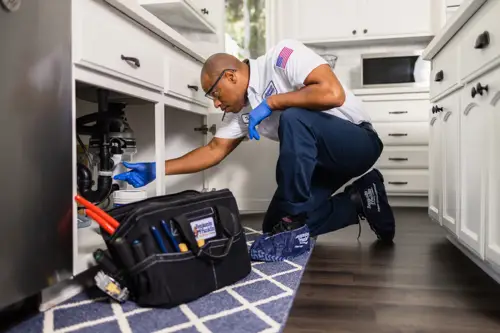
 Troubleshooting Your Garbage Disposal: A No-Stress Guide
Ever had that moment when the kitchen sink in your Fort Meyers, FL home turns into a stubborn, clogged mess? If you’re dealing with a garbage disposal that’s acting up, don’t panic! Most disposal problems are totally fixable, and you don’t always need to call a Benjamin Franklin plumber.
Why Is My Garbage Disposal Not Draining?
First things first, garbage disposals aren’t magical machines that can handle anything you throw at them. They’re actually pretty particular! Using your disposal incorrectly can lead to serious clogs. Some of the common culprits behind disposal clogs include:
- Using too little water: These little guys need water to flush food particles down the drain. If you’re not running water, you’re asking for trouble.
- Pouring hot grease down the drain: Big mistake! Hot grease might seem liquid, but it’ll cool and stick to your pipes faster than you can say “plumber.”
- Overloading the disposal: Trying to grind a mountain of food at once? Your disposal will push back.
- Grinding the wrong stuff: Coffee grounds, eggshells, and stringy vegetable peels are disposal enemy number one.
To keep your disposal working smoothly, avoid sending problematic items down the drain and keep the cold water running while the garbage disposal is operating.
Your Pro Troubleshooting Plan
Safety first! Before you start poking around, make sure the disposal is completely powered off. Unplug it or switch off the circuit breaker, and double-check that it won’t suddenly spring to life.
Now, let’s play detective:
- Take a Peek Inside; Grab a flashlight and look inside the disposal. Use tongs or pliers to pull out any visible chunks of food or debris. Think of it like fishing, but way less fun.
- Plunger Power: Got standing water? Time to break out the plunger. Cover the disposal opening and give it some firm plunges. Pro tip: If you’ve got a double sink, plug the other drain to create better suction.
- The Magic Reset: Most disposals have a reset button hiding on the bottom. Press it and see if that brings your disposal back to life.
- Manual Blade Rescue: No reset magic? Try an Allen wrench or even a wooden spoon handle. Gently rotate the blades to free up any jam. Just be careful and gentle – you’re not trying to win a strength contest.
Home Remedies That Might Help
- Baking Soda and Vinegar Trick: Pour a cup of baking soda, follow with a cup of vinegar, let it fizz for 15-20 minutes, then rinse with warm water. It’s like a gentle spa treatment for your disposal.
- Cleaning Tablets: These are like vitamins for your disposal. Use them regularly to keep things running smoothly.
Tips to Prevent Garbage Disposal Clogs
Want to avoid future garbage disposal disasters like clogs and leaks? Here are some golden rules:
- Always run COLD water during operation.
- Avoid putting fibrous or starchy foods, grease, or large quantities of food waste into the disposal.
- Grind small amounts of food at a time to prevent overloading.
What If You Can’t Fix the Problem?
While most garbage disposal issues can be handled at home, some problems require professional attention. If you’ve tried everything and your garbage disposal is still giving you grief, it might be time to call in a Benjamin Franklin professional. There’s no shame in asking for help – sometimes appliances just need an expert touch.
Remember, your garbage disposal is a kitchen helper, not a garbage can. Treat it right, and it’ll make your kitchen cleanup a breeze!
 We’ve all been there – you’re in the shower, and suddenly you’re standing in ankle-deep water. Or maybe you’re doing the dishes, and that sink just won’t drain. Frustrating, right? Well, I’ve got some simple tips that’ll help you keep your drains unclogged and avoid these types of plumbing headaches. Trust me, your drains will thank you!
 Hey there! Ever wondered how often you should have your drains cleaned in your Fort Myers, FL home? Trust me, I get it – drain maintenance isn’t exactly the most exciting topic, but it’s one of those household tasks that can save you from some real headaches down the road. Let’s break down everything you need to know about keeping your drains happy and healthy. We’ll start with what you can do to keep your drains clean and then, we’ll discuss how to know when it’s time to call in a Benjamin Franklin Plumbing pro!
 Is Your Main Water Line Trying to Tell You Something? Your home’s main water line might not be something you think about often, but it’s actually the lifeline that keeps clean water flowing to your taps. When it starts having problems, things can get messy (and expensive!) pretty quickly. Let’s talk about what can wear out your
  Ever had that heart-stopping moment when you discover water gushing from a pipe in your Fort Myers, Florida home? Or maybe you’re just wondering what would happen if you did? What about main water lines? Are they covered? Well, let’s break down what your homeowners insurance actually covers when it comes to water damage – and trust me, it’s not as straightforward as you might think! Being informed about your policy’s details can help you avoid surprises during the claims process.
 Hey there, DIY warrior! Thinking about replacing a toilet flange on a concrete floor? I know, I know – it sounds like a pain, right? But don’t worry, it’s not as scary as it seems. If you’re already in the process of
  Ever had that heart-stopping moment when you walk into your basement and hear the dreaded sound of rushing water? Yeah, broken pipes are not fun. But here’s the good news: your homeowner’s insurance might be your knight in shining armor. Usually, homeowner’s insurance kicks in if the damage happens suddenly, like a pipe bursting out of nowhere. But it doesn’t always cover water damage, especially if poor maintenance or neglect occurs. This is why it’s so important to talk with a Ben Franklin plumbing professional about routine pipe maintenance.